How to Launch Your First Digital Product in 30 Days
A practical, week-by-week launch plan for professionals. Businease | Build with Ease shows you how to get from product idea to first sale – without quitting your job or losing your mind.
Part of: Digital Business Primer →
You have a product. Or the outline of one. Either way, the question is now: how do you sell this? Who do you tell? In what order? This article is the answer – a concrete, week-by-week plan designed for someone who has a full-time job and 45–90 minutes per weekday to dedicate to this.
This is part of the Digital Business Primer. If you have not yet validated your niche or chosen a platform, start with those articles first – the launch plan assumes both are in place.
Before You Launch – Three Things That Must Be True
A launch that happens before these three conditions are met is a launch that will almost certainly disappoint.
- A defined product: at minimum, an outline, a delivery promise, and a format. It does not need to be finished; it needs to be defined.
- A way to take payment and deliver the product: the platform is set up, the payment method is connected, and you have tested the end-to-end purchase flow yourself.
- At least 20 people who know you and understand enough about what you are offering to make a considered decision about whether to buy it.
If any of these three conditions is not yet true, the next step is not launching – it is preparation. A launch with no payment infrastructure or no warm contacts is not a launch; it is publishing.
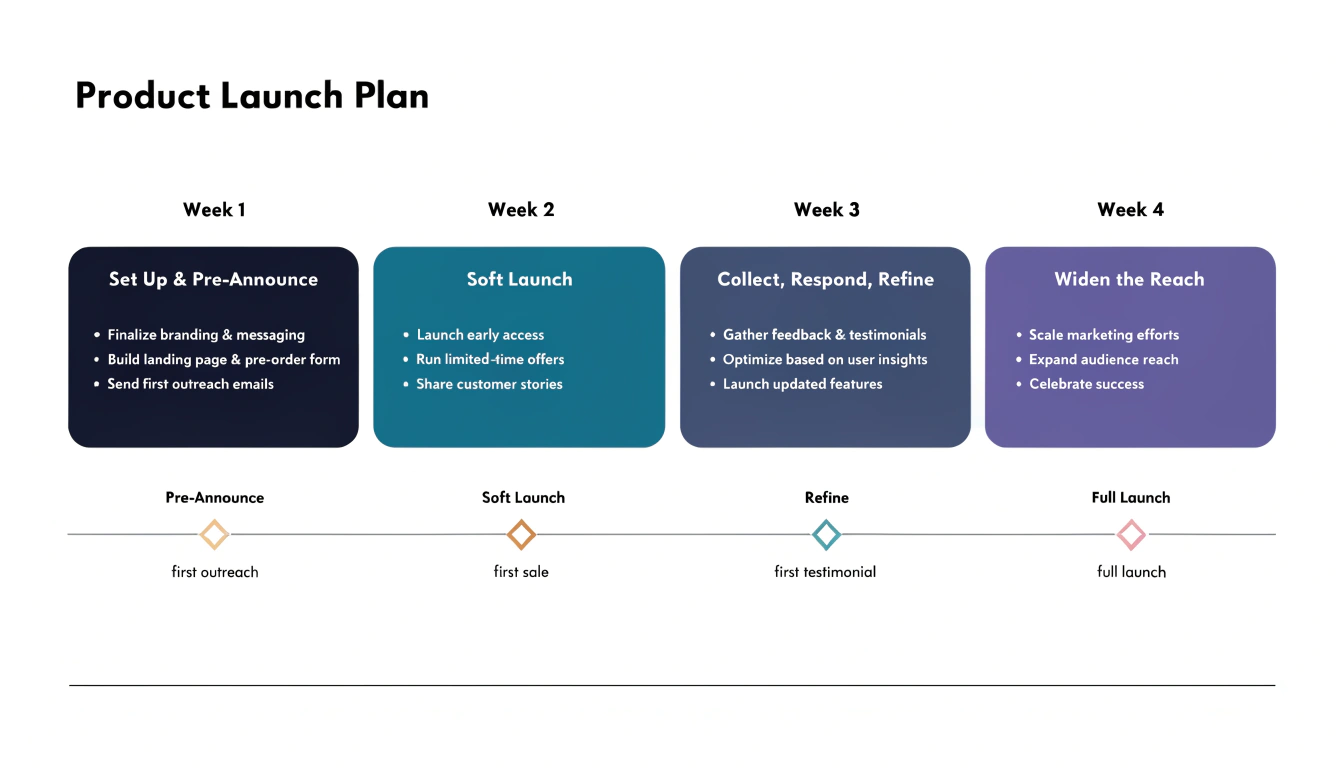
Week One – Set Up and Pre-Announce (Days 1–7)
Days 1–3: Finalise the product outline and delivery structure. Not the finished product – the blueprint.
- Template product: the complete file list and a usage guide outline.
- Course: the module structure and the transformation each module delivers.
- Coaching package: the scope, deliverables, duration, and what "done" looks like for the client.
Days 4–5: Set up the platform storefront and product page. Write the product description – problem, solution, format, price, what the buyer gets. The description is working copy; it will improve with feedback. Launch it imperfect. Days 6–7: Reach out personally to 12–15 people in your professional network – individual messages, not a mass email – who fit your target buyer profile. The message is simple: "I am launching [product] in two weeks for [target buyer]. It addresses [specific problem]. Would you be interested in early access at a discounted price?" Track responses. These are your first potential buyers.
| Week | Focus | Key Actions | Target Outcome |
|---|---|---|---|
| Week 1 (Days 1–7) | Set Up & Pre-Announce | Finalise outline, set up storefront, personal outreach to 12–15 contacts | 5+ positive responses to early-access offer |
| Week 2 (Days 8–14) | Soft Launch | Send launch email, LinkedIn post, beta pricing for first 5–10 buyers | First 3–5 sales at beta price |
| Week 3 (Days 15–21) | Collect & Refine | Personal follow-up with buyers, collect feedback, gather testimonials | 2+ written testimonials, product improvements identified |
| Week 4 (Days 22–30) | Widen Reach | Share testimonials, open to full audience, standard price, email sequence live | Full public launch, welcome sequence active |
Week Two – Soft Launch to Warm Contacts (Days 8–14)
This is the most important week. Send the launch email to your list – even if it is 40 people. For those who responded positively in week one, follow up individually with a direct link and the beta price. Post on LinkedIn: not "my product is live," but a substantive post about the problem your product solves, with a mention that you have built something to address it. Include the link.
Offer the first 5–10 buyers a beta price – 30–40% below your intended full price – in exchange for feedback and a testimonial. Frame this honestly: "I am launching this to a small group first. The price reflects that you are getting access before it is fully refined, and I would love your feedback on what could be better." That framing is respectful, transparent, and converts well with professional buyers who understand the value of early access.
The first sale is a milestone. It proves that someone valued what you built enough to pay for it. That proof – not the revenue – is what matters most in this week.
Week Three – Collect, Respond, Refine (Days 15–21)
Respond personally to every buyer. Not a templated thank-you – a personal message acknowledging their specific situation if you know it. Ask one question: "What was most useful, and what would you add?" This generates the feedback that shapes version two without requiring a formal survey. Fix anything that is broken in the delivery. Do not rebuild the product – improve the experience. Begin collecting testimonials: a specific, results-focused quote ("I used [product] and [specific outcome]") is worth ten times a generic "great product" endorsement.
Week Four – Widen the Reach (Days 22–30)
Share the testimonials in a LinkedIn post: "Here is what early buyers said about [product]." This is social proof without being a pitch. Open the product to your full audience at the standard price. Send a "now available" email to your list. Post again on LinkedIn – a different angle this time. If your launch week post covered the problem, your week four post can cover a specific result one of your early buyers experienced.
Set up the email welcome sequence if you have not yet – new subscribers who found you through the launch content should flow into an automated sequence that builds trust before the next offer appears. Begin identifying what the second product should be, based on the questions buyers have asked and the gaps the feedback has revealed. The first launch is not an endpoint. It is the foundation.
The Day-30 self-check
- Have you made at least 3 sales to people who are not your close friends or family members?
- Do you have at least 2 written testimonials you can use in future marketing?
- Do you understand what buyers found most valuable and what they wished were different?
- Is your email welcome sequence live and collecting new subscribers?
- Do you have a clear hypothesis for what the second product or the next version should include?
Questions About Your First Launch
What if nobody buys?
Distinguish between 'nobody bought' and 'nobody knew it existed.' If you made 20 personal outreach contacts and sent your list a launch email and posted on LinkedIn and still had zero sales, the product description or the offer structure needs work. If you published the product and waited for organic discovery, the problem is distribution, not the product. Most 'nobody bought' situations are distribution problems, not product problems.
Do I need a launch event – a webinar or live session?
Not for your first launch. A live event adds coordination complexity that is not worth the overhead when you have a small audience. Direct outreach, an email to your list, and a LinkedIn post are sufficient. Add a live component when you have an audience large enough to make the overhead worthwhile.
How do I get testimonials if nobody has used the product yet?
Offer beta access before the official launch – 3–5 people in exchange for honest feedback and a testimonial if they find it valuable. These beta testers become your first social proof. Alternatively, think about professional situations where you have already delivered the expertise informally – a colleague whose cashflow problem you helped solve, a mentee you guided through a hiring process. Their experience, framed specifically, is valid social proof.
Should I offer a discount at launch?
A beta or early-access discount – framed honestly as early-access pricing in exchange for feedback – is effective and appropriate. A discount presented as urgency ('limited time offer') without a genuine reason is transparent and works less well with professional buyers. Price the launch honestly and raise it deliberately after the first cohort.
Put these into practice
Keep reading
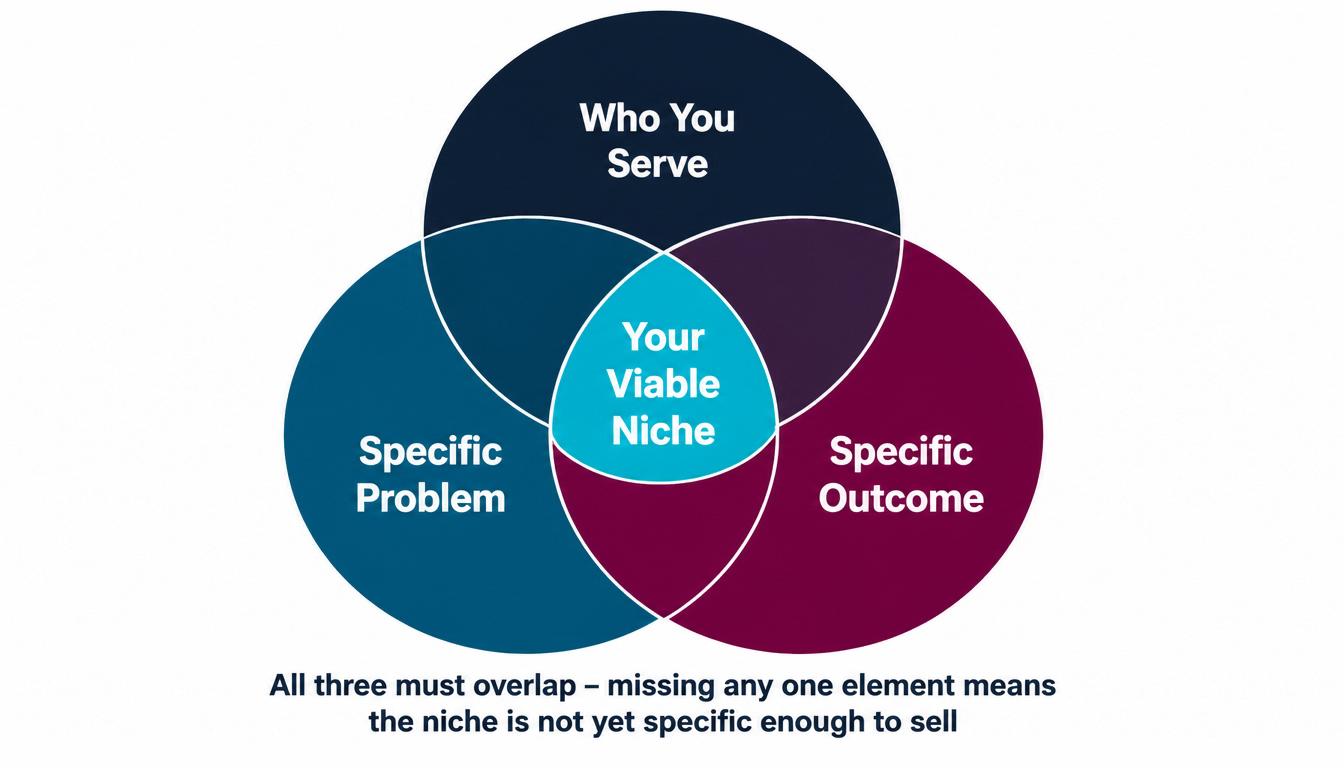
How to Find Your Niche and Validate Your Digital Product Idea
Building before validating is the most expensive mistake in digital business. Businease | Build with Ease shows you how to find your niche and confirm demand before creating anything.
Strategy Tools for African Businesses: A Primer
5 questions strategy helps small businesses answer - and the tools to act on each one.
Get the playbook in your inbox
One short, useful email per week — frameworks, templates, and lessons from solopreneurs in the trenches. No spam, unsubscribe anytime.