How to Find Your Niche and Validate Your Digital Product Idea
Building before validating is the most expensive mistake in digital business. Businease | Build with Ease shows you how to find your niche and confirm demand before creating anything.
Part of: Digital Business Primer →
The scenario is more common than anyone talks about. A professional spends three months recording a course, building a resource toolkit, or writing a comprehensive guide – and then sends it out into the world to discover that the people they expected to buy it are entirely indifferent. Not hostile. Just indifferent. The work was real. The expertise was genuine. But the packaging missed, or the audience was wrong, or the problem was not urgent enough for anyone to pay to solve it.
This is not bad luck. It is a skippable step that was skipped. Validation – confirming that real demand exists for your specific offer before you build it – is the difference between a product people want and a product you thought they would want. The two are not always the same.
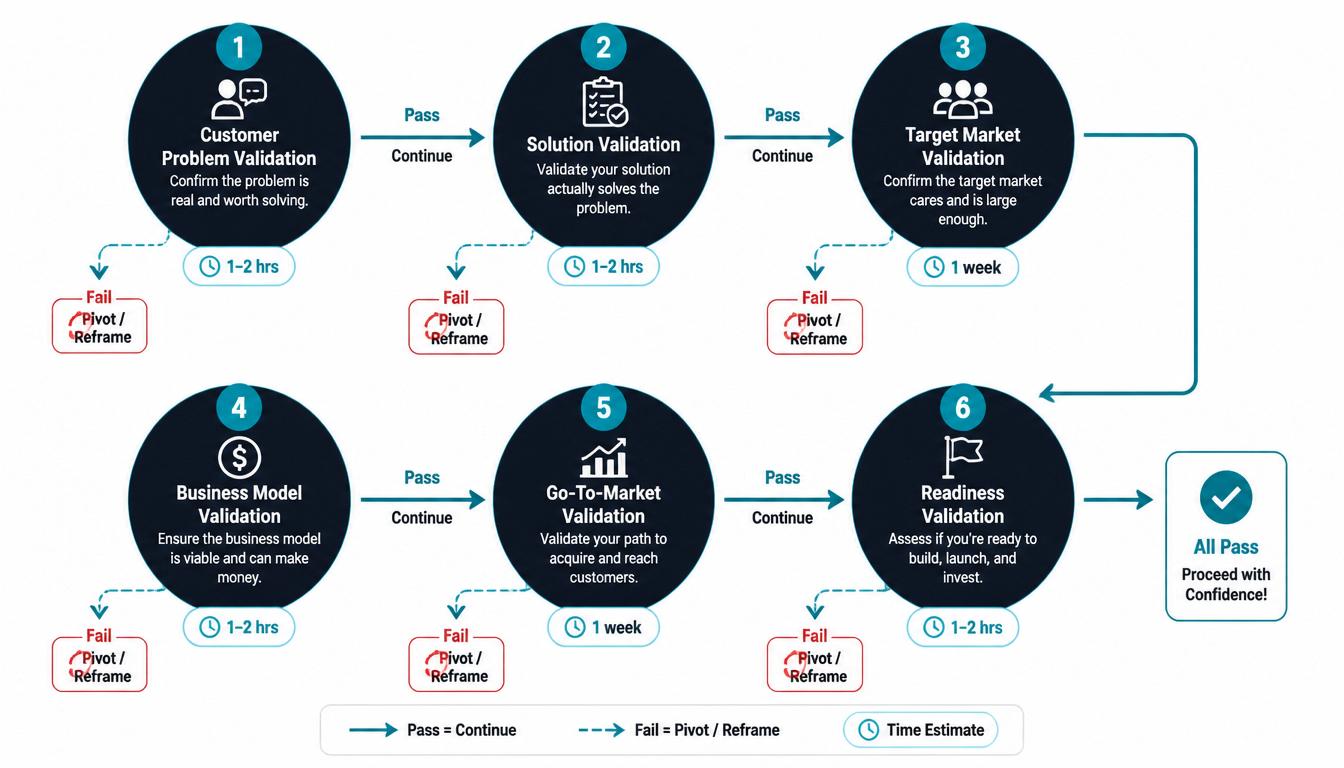
This article is part of the Digital Business Primer. It covers what "niche" means (which is not what most people think), how to find the niche that already exists inside your career, and how to run a six-step validation process that will tell you – before you invest months of evenings – whether your product has a real market.
What "Niche" Means – And Why Most People Get It Wrong
A niche is not a topic category. "Finance" is not a niche. "Marketing" is not a niche. Even "HR for SMEs" is not yet a niche – it is still a broad category that fails to answer the question a buyer actually asks when they are looking for help: is this specifically for me and my situation?
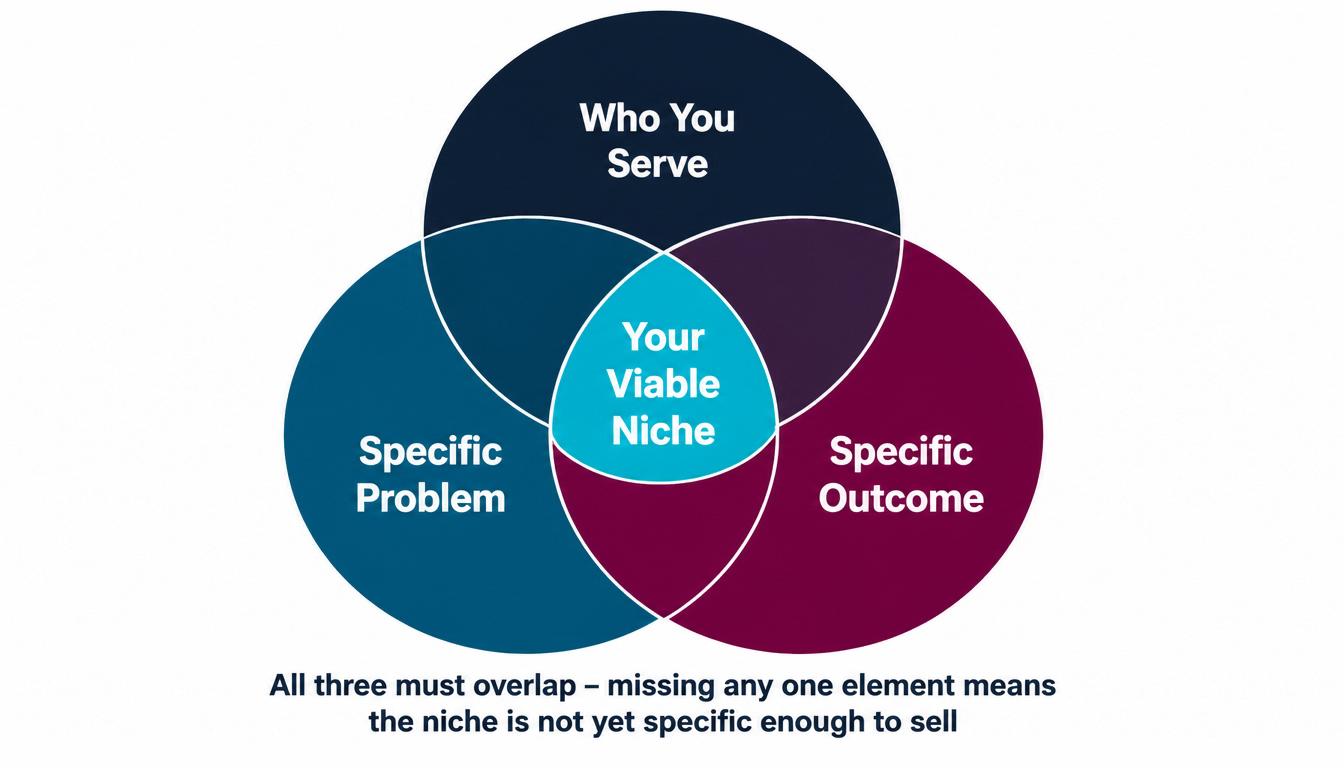
A niche is the specific intersection of three things: who you serve, what problem you solve, and what outcome you deliver. All three elements together. Not one or two.
Tobi is a financial controller at a mid-size manufacturing firm in Ibadan. He has 12 years of experience building monthly management reporting frameworks. His niche hypothesis: helping Nigerian manufacturing SMEs build their first formal management reporting system – moving from "the accountant knows the numbers" to "the owner sees the numbers clearly every month."
His validation: two LinkedIn posts about management reporting visibility generated 47 comments and 12 direct messages. A search turned up dozens of Quora threads asking basic questions about management accounts. He offered three paid discovery calls at ₦8,000 each – all three were booked within four days. He pre-sold a beta toolkit to 6 buyers before building a single spreadsheet. That is a validated niche.
The Red Flags – When to Pivot Your Niche
Not every hypothesis survives validation. These are the signals that indicate a pivot is needed before you invest further:
- No search volume AND no forum discussion AND no LinkedIn engagement – zero interest across all channels means the problem may not be urgent enough for people to actively seek solutions.
- Your target audience does not spend money on learning or advisory services – some professional communities value free peer sharing above paid expertise. Research this before assuming willingness to pay.
- The space is dominated entirely by free, high-quality resources with no paid alternatives – if the best possible product already exists for free, your differentiation needs to be exceptional.
- Nobody books the discovery call even after 20 personal outreach messages – at this point, reframe the problem description before concluding that the niche is wrong. The niche and the packaging are different variables.
- Pre-sell attempts get enthusiasm but no payment – "this is a great idea" is not validation. Money is validation.
Questions About Niche Selection and Validation
How narrow is too narrow for a niche?
A niche is too narrow when the total number of buyers who have the problem, the money, and the motivation to pay is fewer than roughly 500 people. Below that threshold, even a strong conversion rate cannot sustain a meaningful business. Run the Market Sizing Calculator before committing – the math will tell you quickly.
What if my niche has competition?
Competition validates demand. A niche with no competition usually means no one is willing to pay – not a hidden opportunity. Your differentiation is your specific angle, your professional background, and your audience context. In the African professional market particularly, the real problem is undersupply, not oversaturation.
How long does validation take?
Two to four weeks if you run the six steps in parallel. LinkedIn outreach, keyword research, and forum scanning can all happen in the same week. A pre-sell attempt can be set up and run within ten days. Validation is not a slow process – it is simply one that most people skip.
What if I can't find demand for my idea?
First, check whether the issue is the packaging rather than the idea. "Supply chain strategy" may generate no interest while "cut procurement costs by 20% without changing suppliers" – the same expertise, framed around a specific costed outcome – generates significant demand. If reframing does not reveal demand, move to a different problem in your expertise portfolio.
Put these into practice
Keep reading
Which Digital Business Model Fits Your Life?
Five digital business models mapped honestly against creation effort, income ceiling, and time to first sale — with a self-diagnostic framework.
The Digital Business Primer: Everything You Need to Know Before You Build, Launch, or Sell
You have spent years building a career. This guide is about what to do with that experience – without the tech paralysis, the wrong platform, or the wasted months building something nobody asked for.
Get the playbook in your inbox
One short, useful email per week — frameworks, templates, and lessons from solopreneurs in the trenches. No spam, unsubscribe anytime.